
FCRA Bill Explained: What It Is, How It Becomes Law, and What Majority Is Required
The Foreign Contribution Regulation Act (FCRA) governs foreign donations to individuals and organizations in India. Here's how an FCRA amendment bill is passed, the majority required, and its potential impact.
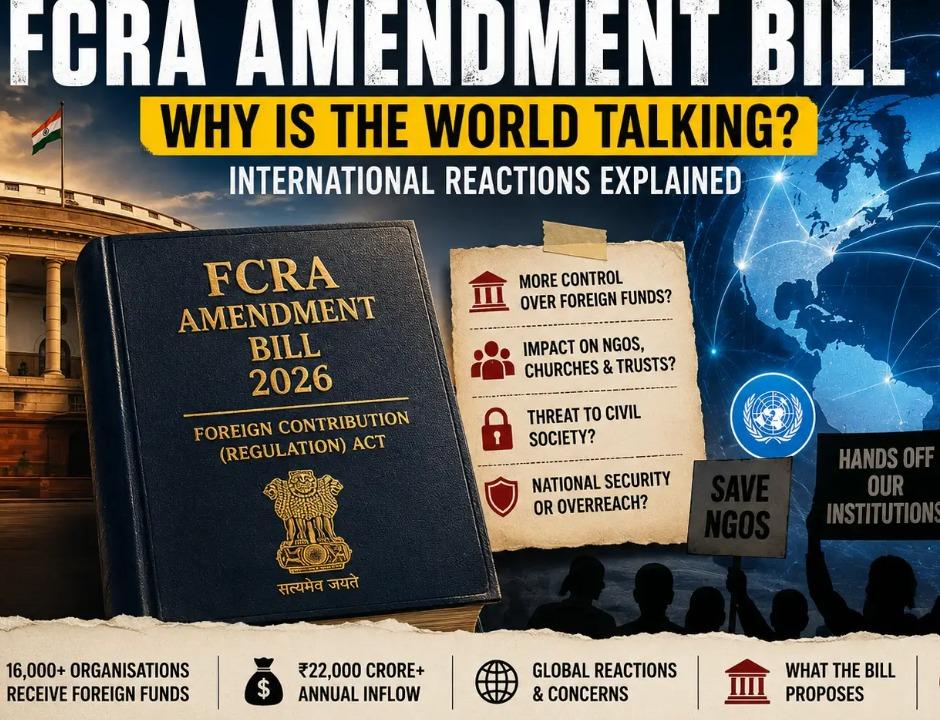
FCRA Bill Explained: What It Is, How It Becomes Law, and What Majority Is Required
The Foreign Contribution Regulation Act (FCRA) is an Indian law that regulates the acceptance and use of foreign donations by NGOs, associations, educational institutions, religious organizations, and certain individuals. Its primary objective is to ensure that foreign funding does not adversely affect India's sovereignty, security, public interest, or democratic processes.
Whenever the government proposes changes to the Act, they are introduced in Parliament through an FCRA Amendment Bill. Such amendments can change eligibility rules, compliance requirements, reporting obligations, or restrictions on foreign funding.
How Does an FCRA Bill Become Law?
An amendment to the FCRA follows the normal legislative process:
- The bill is introduced in either the Lok Sabha or the Rajya Sabha.
- It is debated by Members of Parliament.
- The bill is put to a vote in both Houses.
- Once both Houses pass the bill, it is sent to the President of India for assent.
- After presidential approval, it becomes law.
What Majority Is Required?
An FCRA amendment is generally an ordinary bill, not a constitutional amendment.
It requires a Simple Majority, meaning:
- More MPs voting in favour than against.
- Only members present and voting are counted.
- It does not require a two-thirds majority.
For example:
- MPs present and voting: 500
- Votes needed to pass: 251 or more
If only 400 MPs vote, then 201 votes are enough.
Can It Be Passed Easily?
The chances depend on several political factors:
- Whether the ruling coalition has enough support in Parliament.
- Whether coalition partners support the proposal.
- The opposition's position.
- Attendance during voting.
- Possible amendments during debate.
If the government has a working majority in the Lok Sabha and sufficient support in the Rajya Sabha, the bill has a strong chance of passing.
Possible Impact of an FCRA Amendment
Depending on the contents of the bill, it could:
- Change rules for NGOs receiving foreign donations.
- Increase or reduce compliance requirements.
- Introduce stricter reporting and auditing norms.
- Affect charities, educational institutions, research organizations, and religious bodies.
- Influence foreign-funded social and development projects.
Key Facts
TopicDetailsLawForeign Contribution Regulation Act (FCRA)Bill TypeOrdinary BillMajority NeededSimple MajorityHouses RequiredLok Sabha and Rajya SabhaFinal StepPresident's Assent
Tags
More Stories
Jayant Chaudhary Rajya Sabha Move: BJP-RLD Plan Could Reshape UP Politics Before 2027
5 Oct 2026

Iran’s Pezeshkian Heads to UN Amid Tight US Movement Curbs in New York
22 Sept 2026

DUSU Election 2026: Who Is NSUI Presidential Candidate Vijay Shankar Meena?
19 Sept 2026

Disha Salian Case: Father to Personally Serve Fresh Defamation Notice on Aaditya Thackeray at Matoshree on September 19
18 Sept 2026