
Falkland Islands dispute explained: Why the UK and Argentina are still fighting over the islands
The Falkland Islands remain one of the most sensitive territorial disputes between Britain and Argentina. From the 1982 war and Argentina’s constitutional claim to emerging oil resources and renewed US involvement, the islands continue to carry major political, strategic and economic significance.
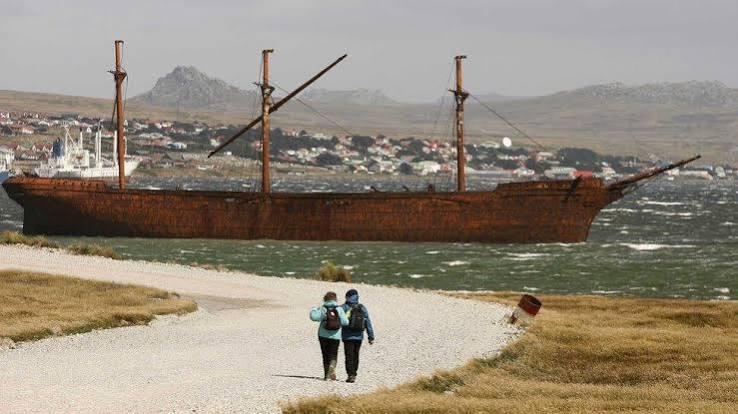
Falkland Islands dispute explained: Why the UK and Argentina are still fighting over the islands
The long-running dispute over the Falkland Islands, known as the Malvinas in Argentina, has once again moved into the international spotlight after Argentine President Javier Milei renewed his country’s sovereignty claim.
The latest tensions have been driven not only by the question of who should control the South Atlantic islands, but also by the prospect of significant offshore oil production and growing uncertainty over the United States’ traditionally neutral position.
Argentina has repeatedly insisted that the islands belong to it, while Britain maintains that the Falkland Islanders have the right to determine their own political future.
Why are the Falkland Islands disputed?
The Falkland Islands are a self-governing British Overseas Territory situated roughly 600 km (375 miles) east of Argentina’s southern coast.
The sovereignty dispute dates back decades, but it reached its most dramatic point in 1982, when Argentina and the United Kingdom went to war over the territory.
The conflict lasted 74 days and resulted in the deaths of 649 Argentine troops and 255 British service personnel before Argentine forces surrendered.
Although the war ended with Britain retaining control, Argentina never abandoned its sovereignty claim.
The claim is also embedded in Argentina’s constitution, making the Falklands issue closely linked with national identity and domestic politics.
Why does Argentina want the Falkland Islands?
For Argentina, the Malvinas question goes beyond territory.
Successive governments have maintained that the islands are Argentine territory and have called for their sovereignty to be transferred to Argentina through negotiations.
Milei has also made the issue a prominent part of his political messaging, describing the islands as part of Argentina’s future and arguing that the country should ultimately recover them.
The issue provides an important nationalist theme at a time when Milei faces domestic political challenges.
Oil has raised the economic stakes
The Falklands dispute has gained another dimension because of the potential for substantial offshore oil production.
One of the most closely watched projects is the Sea Lion oil development, located in waters around 220 km (140 miles) north of the islands.
Production from the project is expected to begin in 2028, according to the supplied report.
Argentina considers the development an unauthorised exploitation of natural resources in waters it claims as its own. Milei has warned that further development could be treated as a matter of national security.
The companies involved, Rockhopper Exploration and Navitas Petroleum, have rejected the threats and said they intend to continue with the project under licences issued by the Falkland Islands government and supported by Britain.
If large-scale production proceeds, the economic value of the surrounding waters could make the sovereignty dispute even more consequential.
What does the UK say?
Britain's position is centred on the right of the Falkland Islanders to determine their own future.
British officials have repeatedly rejected Argentina's sovereignty claim and stressed that the islanders themselves want to remain connected to the United Kingdom.
British Defence Secretary Wes Streeting described London's commitment to the territory as “unshakeable”, while Foreign Secretary Ed Miliband said Britain would continue to defend the islanders’ right to self-determination.
For the UK, the dispute therefore involves not only territorial sovereignty but also the principle that the wishes of the people living on the islands should be respected.
Why is the United States important?
The United States has historically maintained a relatively neutral position regarding the competing British and Argentine claims.
Washington has recognised Britain's effective administration of the Falklands while avoiding an explicit endorsement of either country's sovereignty claim.
That approach could become more complicated if the US changes its position.
Recent comments from US President Donald Trump have raised questions about whether Washington could reconsider its longstanding stance. According to the supplied report, the issue has emerged amid wider tensions between Trump and Britain over defence spending and other foreign-policy disagreements.
Milei, meanwhile, has cultivated a close relationship with Trump and has presented Argentina as a reliable Western-aligned partner.
Could the dispute become a wider diplomatic issue?
Any significant change in the US position could add another layer to an already sensitive UK-Argentina dispute.
However, analysts cited in the supplied report argue that Washington alone cannot resolve the sovereignty question.
A settlement would ultimately require Britain and Argentina to engage in negotiations and address the competing claims.
The issue is therefore unlikely to be settled simply through a change in US policy.
Falklands dispute: What happens next?
The combination of Argentina’s constitutional claim, Britain's determination to retain control, the wishes of Falkland Islanders and the growing importance of offshore oil ensures that the dispute will remain politically sensitive.
Milei's renewed focus on the Malvinas has also come at a time of changing relationships between major Western powers.
For now, Britain continues to control the islands, while Argentina continues to press its sovereignty claim. The emerging oil industry could make the dispute increasingly important economically, but any lasting settlement would still depend on diplomacy and negotiations between the two sides.
More Stories

Peskov Says 90% of Russia-BRICS Transactions Use National Currencies
8 Sept 2026

US Leads Global Finance Jobs as London and Hong Kong Hold Key Niches
8 Sept 2026

Toronto Homeowners Face Heavy Losses as Property Prices Reverse
8 Sept 2026
From ‘New America’ to Tariff Threats: How Trump’s Pressure Campaign Is Reshaping Global Alliances
8 Sept 2026