
Trump Targets Iran’s Trade Lifelines as China, UAE, Turkey, Iraq and India Face Pressure
The Trump administration has launched an “economic D-Day” campaign aimed at isolating Iran from the global economy, putting pressure on major trading partners including China, the UAE, Turkey, Iraq and India.
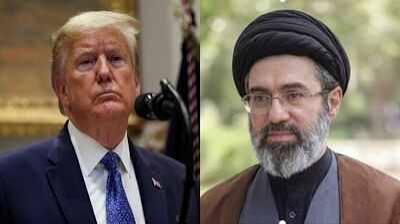
Trump Targets Iran’s Trade Lifelines as China, UAE, Turkey, Iraq and India Face Pressure
The Trump administration has announced a new campaign to isolate Iran from the global financial system, threatening penalties against entities that continue to facilitate trade with Tehran.
The move, described by Washington as an “economic D-Day” campaign, is aimed at disrupting the economic networks that have helped sustain Iran through nearly six months of war. The United States has warned that entities involved in laundering money for Iran could potentially lose access to the U.S. dollar system.
The campaign could put Washington at odds with several of Iran’s most important trading partners, including China, the United Arab Emirates, Turkey, Iraq and India.
China
China remains Iran's most important economic partner and the largest buyer of its crude oil. According to U.S. government estimates cited in the report, China accounts for around 90% of Iran's oil exports.
Reported bilateral trade between China and Iran reached about $9.96 billion in 2025, excluding an estimated $31.2 billion in Iranian crude oil exports to China that were not officially reported.
Independent Chinese refineries have purchased much of the Iranian crude, with shipments sometimes rebranded as oil from other countries and payments routed through intermediaries outside the U.S. dollar system.
The U.S. Treasury has already sanctioned several Chinese refineries over Iranian oil purchases. Beijing, however, has opposed Washington's sanctions policy and has previously instructed domestic companies to disregard certain U.S. sanctions.
Analysts say China is unlikely to openly confront Washington but could quietly increase compliance among state-owned banks and energy companies to protect their access to the dollar-based financial system and the U.S. market.
United Arab Emirates
The UAE has traditionally served as one of Iran's most important commercial and financial gateways because of its geographic proximity across the Persian Gulf.
Bilateral trade between the UAE and Iran was around $28 billion in 2024, making the Emirates Iran's largest source of imports, according to WTO data.
However, relations have come under pressure following recent security incidents involving missiles fired toward Emirati territory.
Iran has also relied on UAE-based banks, trading companies and supply chains to connect with the international economy. U.S. officials and analysts have argued that stronger enforcement by Emirati authorities would be necessary to restrict these channels.
Turkey
Turkey maintains extensive commercial and energy ties with Iran. Bilateral trade reached approximately $5.7 billion in 2024, according to Turkey's Foreign Ministry.
Turkey exports machinery, chemicals, agricultural products and other manufactured goods to Iran while importing energy products from its neighbor.
Iranian natural gas has also played a role in Turkey's energy supply. Although Ankara has been diversifying its sources by increasing imports from countries such as Azerbaijan and Russia, Turkey has not indicated that it plans to completely cut economic ties with Tehran.
Iraq
Iraq is another major economic partner for Iran and remains dependent on Iranian energy supplies.
Iran supplies natural gas to Iraq under a long-term agreement, while Iranian electricity has historically accounted for a significant share of Iraq's power generation.
Trade between the two countries exceeded $10 billion in 2025, with Iran exporting food, consumer products and other goods to the Iraqi market.
Iraq also reportedly pays Iran billions of dollars annually for natural gas used in electricity generation. New U.S. sanctions could therefore create difficulties for Baghdad if they restrict the country's ability to make payments for Iranian energy.
India
India remains one of Iran's significant trading partners, although bilateral trade has declined in recent years.
Trade between India and Iran stood at approximately $1.6 billion in the year ending March 2026, down from around $2.3 billion in the year ending March 2023.
India primarily exports rice, tea, sugar and pharmaceuticals to Iran, while importing products including dry and fresh fruits.
India also resumed Iranian crude oil imports in April following a seven-year halt after Washington temporarily eased sanctions on Iranian oil exports.
The latest U.S. threat could put those transactions under renewed pressure. If Washington proceeds with sanctions against companies purchasing Iranian energy, Indian refiners and other businesses involved in Iranian oil trade could face increased scrutiny.
Growing Pressure on Iran’s Economic Network
The United States' latest strategy seeks to target not only Iran itself but also the financial institutions, companies and trading partners that help Tehran maintain access to international markets.
China's dominance in Iranian oil purchases, the UAE's role as a commercial hub, Turkey's energy links, Iraq's dependence on Iranian gas and India's renewed oil trade could all become pressure points as Washington attempts to tighten sanctions enforcement.
How aggressively the United States implements the threatened measures could determine whether Iran's remaining international trade channels continue operating or face significant disruption.
Tags
More Stories

Peskov Says 90% of Russia-BRICS Transactions Use National Currencies
8 Sept 2026

US Leads Global Finance Jobs as London and Hong Kong Hold Key Niches
8 Sept 2026

Toronto Homeowners Face Heavy Losses as Property Prices Reverse
8 Sept 2026
Falkland Islands dispute explained: Why the UK and Argentina are still fighting over the islands
8 Sept 2026