
Using 90% of Your Credit Card Limit? Here’s How It Can Affect Your Credit Score
Using 90% of your credit card limit can make your credit utilisation ratio very high and may negatively affect your credit score, even if you pay the entire bill on time. Here’s how credit utilisation works and how pre-statement payments can help.
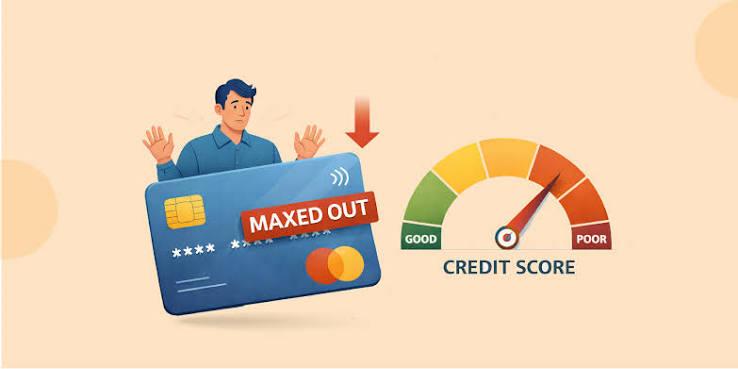
Using 90% of Your Credit Card Limit? Here’s How It Can Affect Your Credit Score
Using a credit card close to its maximum limit does not automatically mean you are financially irresponsible. A large purchase can temporarily push your outstanding balance higher, especially when your credit limit is relatively low.
However, regularly using 90% or more of your available credit can hurt your credit profile, even if you never miss a payment.
The key factor is your credit utilisation ratio (CUR) — the proportion of your available revolving credit that is being used. Credit utilisation is one of the important factors considered when assessing a borrower's credit profile.
This means paying your credit card bill in full by the due date is essential, but it does not necessarily prevent the impact of a high utilisation ratio from appearing on your credit report.
What happens if you use 90% of your credit limit?
Consider a simple example.
Suppose your credit card has a limit of ₹1 lakh and the balance reported for a particular billing cycle is ₹90,000.
Your credit utilisation would be:
₹90,000 ÷ ₹1,00,000 × 100 = 90%
A 90% utilisation ratio is considerably higher than the level generally considered comfortable for maintaining a healthy credit profile.
According to BankBazaar CEO Adhil Shetty, keeping utilisation below 30% is generally a useful benchmark for cardholders.
Importantly, there is a difference between paying your bill on time and the balance that gets reported to a credit bureau.
If ₹90,000 is reported as your outstanding balance and you subsequently pay the entire amount before the due date, your repayment history remains positive. However, the high utilisation reported for that cycle can still affect how your credit profile is assessed.
Paying the full bill does not always eliminate high utilisation
Many cardholders assume that paying the complete outstanding amount by the due date means their credit utilisation will have no impact.
That is not necessarily the case.
Credit card issuers generally report account information to credit bureaus periodically. If a high balance is reported before you make your payment, the bureau may record a high utilisation level for that reporting cycle.
Therefore, the timing of your payment can matter.
For example, if your credit card limit is ₹1 lakh and you spend ₹80,000, making a payment before the statement or reporting date can reduce the balance that appears for that cycle.
If the reported balance falls to ₹20,000, the utilisation shown would be 20% rather than 80%.
This does not mean cardholders need to make payments after every transaction. Instead, people who frequently have high balances can consider paying down part of the outstanding amount before the statement is generated.
Does credit utilisation need to stay below 30%?
The 30% figure is best treated as a general benchmark rather than a universal rule.
A temporary utilisation level above 30% does not automatically mean your credit score will collapse. Credit scoring also considers other aspects of your credit behaviour.
However, consistently maintaining very high utilisation can signal that you are relying heavily on available revolving credit.
Someone who occasionally reaches 70% or 90% utilisation but has strong repayment behaviour may have a very different credit profile from someone who repeatedly remains close to the maximum limit and misses payments.
The goal, therefore, should be to keep reported balances comfortably below the available limit whenever practical.
What if you have more than one credit card?
If you own multiple credit cards, it is useful to look at overall credit utilisation as well as individual card utilisation.
Suppose you have three credit cards, each with a limit of ₹1 lakh.
You owe:
- Card 1: ₹80,000
- Card 2: ₹10,000
- Card 3: ₹0
Your total outstanding balance is ₹90,000, while your combined credit limit is ₹3 lakh.
Your overall utilisation is therefore:
₹90,000 ÷ ₹3,00,000 × 100 = 30%
Although one card has an 80% utilisation ratio, your combined utilisation is 30%.
This illustrates why looking only at one card may not provide the complete picture.
That said, consistently maxing out a single card can still be undesirable. If possible, spreading spending across available cards and keeping individual balances under control can help maintain a healthier credit profile.
Can increasing your credit limit help?
Increasing your credit limit can reduce your utilisation ratio if your spending remains unchanged.
For example, suppose you have a ₹1 lakh limit and a ₹50,000 balance.
Your utilisation is 50%.
If the limit is increased to ₹2 lakh while your outstanding balance remains ₹50,000, utilisation falls to:
₹50,000 ÷ ₹2,00,000 × 100 = 25%
However, a higher credit limit should not be treated as an invitation to increase spending.
Consumers should also remember that requesting a credit-limit increase may, depending on the lender and circumstances, involve a credit enquiry that could have a small effect on the credit profile.
What is more important: utilisation or paying on time?
Both matter, but payment history should remain a top priority.
A borrower should never delay a credit card payment simply to maintain a lower utilisation ratio.
Missing payments can damage a credit profile far more seriously than a temporary increase in utilisation.
A sensible approach is:
- Pay your credit card bill on time and in full whenever possible.
- Avoid regularly using most of your available limit.
- Consider paying part of a large balance before the statement is generated.
- Avoid unnecessary new credit applications within a short period.
- Keep older credit accounts open when appropriate.
- Monitor your credit report for incorrect or unfamiliar entries.
Other factors that can influence your credit profile
Credit utilisation is only one part of the broader credit picture.
Consumers should also pay attention to:
Payment history: Missing EMIs or credit card payments can negatively affect your credit profile.
New credit applications: Applying for several loans or cards within a short period can result in multiple credit enquiries.
Credit history: Maintaining a longer, positive record of responsible borrowing can be beneficial.
Credit mix: Having experience with different types of credit can form part of your overall credit profile.
Existing debt: Taking on more debt than you can comfortably manage can create financial stress and increase the risk of missed payments.
Should you worry if you used 90% once?
Not necessarily.
A single month in which you use 90% of your credit limit does not automatically mean your credit score will suffer permanently.
The bigger concern is repeatedly maintaining very high utilisation.
If you make a large purchase and your balance temporarily rises, paying it down and returning to lower utilisation can help your profile over time.
If the purchase is planned, another option is to make an interim payment before the statement is generated, reducing the balance that may be reported.
Bottom line
Using 90% of your credit card limit can negatively affect your credit profile, particularly when such high utilisation is repeatedly reported.
Paying the complete bill by the due date remains critical because it protects your repayment history. However, full repayment does not necessarily change a high utilisation figure that was already reported for that billing cycle.
For cardholders who frequently use a large portion of their limit, keeping reported balances lower, making payments before the statement is generated and maintaining manageable spending can help.
Ultimately, the healthiest credit-card strategy is not simply to chase a particular utilisation percentage. It is to borrow within your means, keep balances under control and never compromise on timely repayment.
Disclaimer: This article is for informational purposes only and should not be considered financial, investment, tax or legal advice. Credit-scoring models and reporting practices may vary. Readers should consult a qualified financial professional for advice based on their individual circumstances.
Tags
More Stories

Peskov Says 90% of Russia-BRICS Transactions Use National Currencies
8 Sept 2026

US Leads Global Finance Jobs as London and Hong Kong Hold Key Niches
8 Sept 2026

Toronto Homeowners Face Heavy Losses as Property Prices Reverse
8 Sept 2026

Falkland Islands dispute explained: Why the UK and Argentina are still fighting over the islands
8 Sept 2026