
HDFC Bank May Appeal NCLT Approval of Subhash Chandra’s ₹6.25 Crore Personal Guarantor Repayment Plan
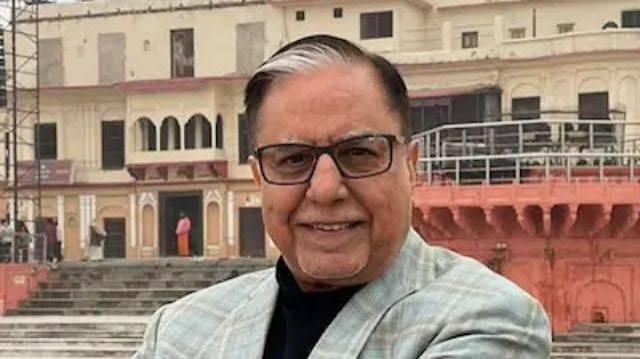
HDFC Bank is considering an appeal against the NCLT’s approval of a repayment plan under which Essel Group founder Subhash Chandra would pay ₹6.25 crore against admitted creditor claims of about ₹22,000.57 crore.
HDFC Bank May Appeal NCLT Approval of Subhash Chandra’s ₹6.25 Crore Personal Guarantor Repayment Plan
HDFC Bank, India’s largest private-sector lender, is considering challenging the National Company Law Tribunal’s (NCLT) approval of a repayment plan submitted by Essel Group founder Subhash Chandra in his personal guarantor insolvency case.
Under the approved resolution plan, Chandra is required to contribute ₹6.25 crore toward admitted claims of approximately ₹22,000.57 crore. HDFC Bank had opposed the proposal and voted against it during the creditors’ voting process. The lender is now evaluating whether to approach the National Company Law Appellate Tribunal (NCLAT).
HDFC Bank said its admitted claim represented about 3.2 per cent of the total claims considered in the proceedings. The exposure was originally with HDFC Ltd and became part of HDFC Bank following the merger of the two entities in 2023.
Chandra has disputed the amount of debt forming the basis of the insolvency proceedings. According to him, the relevant claims amounted to around ₹3,992 crore rather than more than ₹22,000 crore.
Chandra has also clarified that he did not personally borrow money from the lenders involved. Instead, he had provided personal guarantees for loans obtained by companies associated with the Essel Group.
“There is no personal borrowing by Dr Subhash Chandra from any of the creditors named in the order or from any other creditor/lender. He only signed personal guarantees,” Chandra said in a statement.
He added that the guarantees he had provided covered approximately ₹22,000 crore and that the repayment proposal received approval from 80.814 per cent of creditors who voted. Chandra also claimed that several creditors did not participate in the voting despite the proposal remaining open for several days.
Other Lenders Consider Appeal
HDFC Bank is not the only lender dissatisfied with the proposed recovery. Other financial institutions are also examining legal options against the NCLT order.
A senior banking executive described the recovery as unacceptable, saying the resolution plan involved an exceptionally large haircut and was not viable for creditors. The lender is also considering an appeal before the NCLAT.
Government sources have sought to clarify that the ₹22,000.57 crore figure should not be interpreted as money personally borrowed by Chandra. The amount represents claims admitted against him in his role as a personal guarantor for loans taken by various Essel and Zee-linked companies.
The principal corporate borrowers continue to remain responsible for their outstanding liabilities. According to government sources, the approved repayment framework envisages payments of approximately ₹1,494 crore from the corporate borrowers, in addition to Chandra’s personal contribution.
Major Lenders Opposed the Plan
Several major financial institutions voted against the repayment proposal. LIC Housing Finance had a 6.09 per cent voting share, while HDFC Bank held 3.17 per cent. Axis Bank accounted for 2.86 per cent, Canara Bank 1.60 per cent and IDBI Trusteeship Services, representing the Franklin Templeton fund, held 3.36 per cent.
RBL Bank had a 0.55 per cent voting share and Union Bank of India (UK) held 0.76 per cent. IndusInd Bank, with a 1.11 per cent share, did not vote, while Indiabulls Housing Finance, with a 1.98 per cent voting share, supported the plan.
LIC Housing Finance separately told stock exchanges that it continued to retain and enforce its security interests over secured assets pledged or mortgaged against the financial facilities.
For LICHFL, the admitted claim stood at ₹1,322.39 crore. The repayment plan provided only ₹38.09 lakh against this amount, representing roughly 0.028 per cent of the admitted dues.
The housing finance company had strongly opposed the proposal before the tribunal, arguing that such a limited recovery did not justify approval of the plan. It also questioned whether the proposed payment should be treated as sufficiently certain.
NCLT Approval and Possible NCLAT Challenge
The insolvency proceedings originated from Chandra’s role as a personal guarantor for loans raised by companies associated with the Essel Group. Indiabulls Housing Finance initiated proceedings after the outstanding dues were not repaid.
During the insolvency process, Chandra submitted a repayment proposal aimed at settling creditors’ claims. The NCLT ultimately approved the plan, subject to modifications involving the list of eligible creditors and redistribution of the ₹6.25 crore repayment corpus.
The tribunal’s order makes the plan binding on creditors covered by it, including lenders that voted against the proposal.
The order further states that once a discharge order is issued under Section 138 of the Insolvency and Bankruptcy Code, creditors cannot continue pursuing the personal guarantor for past liabilities covered by that discharge.
The possibility of an NCLAT appeal therefore remains significant for dissenting lenders. Banks could challenge aspects of the NCLT’s decision, including the approval of the repayment plan, the voting process and the treatment of creditor claims.
Legal expert Raheel Patel of Gandhi Law Associates said the ₹6.25 crore corpus represented an exceptionally small recovery compared with admitted claims of roughly ₹22,006 crore, resulting in a haircut of more than 99.9 per cent.
Patel noted that the distribution is broadly proportionate to eligible admitted claims. He added that the NCLT’s directions do not increase the overall repayment corpus but require certain unsupported claims to be removed, with their allocated amounts redistributed among eligible creditors. This could marginally improve recoveries for some lenders.
Tags
More Stories

India Raises China Business Visa Hurdles as Firms Face Travel Disruptions
8 Sept 2026
Vadodara-Ratlam Rail Expansion: Two New Lines Planned, Vishwamitri-Dabhoi to Get Double Track
7 Sept 2026
Bengaluru-Vijayawada Highway: New 343-Km Corridor to Cut Journey by 110 Km
7 Sept 2026
'Trapped Students Making Phone Calls': BJP MLA on Delhi Building Collapse in Satya Niketan
6 Sept 2026