
Samsung India job cuts: Nearly 100 executives asked to leave as company restructures TV and home appliance businesses
Samsung India has reportedly begun a workforce reduction across its television and home appliance divisions, with around 80-100 executives asked to exit amid rising costs, weaker demand and an ongoing restructuring exercise.
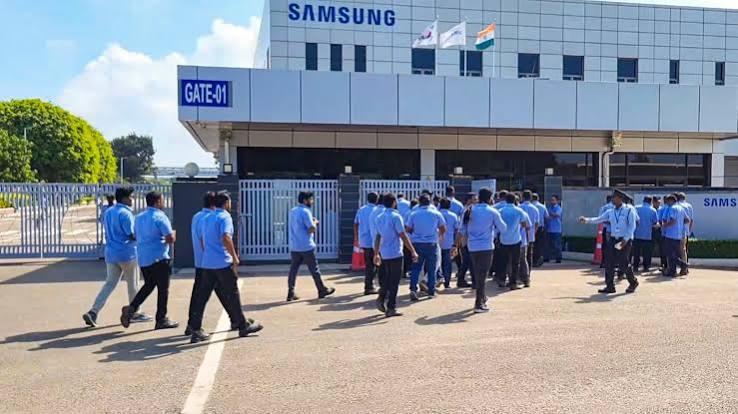
Samsung India job cuts: Nearly 100 executives asked to leave as company restructures TV and home appliance businesses
Samsung India has reportedly started reducing its workforce in parts of its consumer electronics business as the company faces mounting cost pressures and softer demand.
According to a report by The Economic Times citing industry executives, around 80 to 100 executives have so far been asked to leave the company. The affected employees reportedly include senior officials at the director level, team leaders and managers working across Samsung's headquarters, branches and regional operations.
The workforce reduction is being implemented in phases rather than through a single large-scale exercise. Some employees have reportedly received termination communications in small batches, with certain staff members being asked to leave without completing their notice periods.
Sales and marketing teams among those affected
The current restructuring is primarily focused on Samsung's television and home appliance businesses. However, the impact could extend further across the company's sales and marketing operations.
An industry executive cited by ET estimated that as many as 25% of the sales and marketing workforce in Samsung's electronics business could eventually be affected. This figure includes both direct employees and workers engaged through manpower agencies.
Samsung's domestic electronics sales organisation is estimated to have approximately 550-600 executives, excluding its significantly larger smartphone sales operation.
Reports also indicate that employees being separated from the company are being offered severance benefits. The package reportedly includes three months' salary, along with an additional month's pay for every completed year of service.
Rising costs add pressure
Samsung's India operations are dealing with several challenges at the same time. Memory chip prices have risen sharply, while the depreciation of the Indian rupee has increased the cost of imported components and products.
The rupee reportedly weakened by nearly 10% during FY26, adding to pressure on the company's margins. At the same time, higher raw material costs and weaker consumer demand have made conditions tougher for the electronics industry.
India's smartphone market has also experienced a slowdown. Industry estimates cited by ET indicate that smartphone volumes declined by around 11-12% year-on-year.
The smartphone category remains particularly important to Samsung in India, accounting for roughly three-fourths of the company's revenue in the country.
Smartphone business remains protected
Despite the broader restructuring, Samsung's smartphone sales organisation has reportedly been left out of the current round of job cuts.
The company is believed to be counting on the upcoming Diwali festive season to revive consumer demand. Samsung has also received a positive response for its premium Galaxy Fold and Flip foldable devices, although smartphones priced above ₹1 lakh represent only a small portion of India's overall smartphone market.
Samsung's market position has nevertheless faced pressure. Counterpoint Research data cited by ET showed the company falling to third place in India's smartphone market during the April-June quarter, behind Vivo and Oppo.
The company may therefore reassess its mobile operations later depending on how demand develops, particularly after the festive season.
Samsung India remains a major business
The reported layoffs come despite Samsung maintaining a substantial presence in India's consumer electronics market.
According to its latest filings with the Registrar of Companies, Samsung India's revenue reached approximately ₹1.1 lakh crore in FY25, representing a 12% increase from the previous year.
Its net profit also climbed 38% to ₹11,287 crore during the financial year.
Home appliances accounted for around 11% of the company's Indian sales, making the category its second-largest business after smartphones.
This suggests that the workforce reduction is currently more closely linked to cost optimisation and restructuring in specific divisions than to a broad collapse of Samsung's India business.
Branch consolidation and team restructuring
Samsung is also reorganising its physical operations across the country. Several branch offices are reportedly being consolidated, with locations such as Ranchi and Patna, Delhi and Gurgaon, and Punjab and Chandigarh being brought together.
The consolidation has resulted in some roles becoming redundant, according to industry sources cited in the report.
The company had also considered combining its television and home appliance sales teams to reduce management layers and operating costs. However, the proposed merger has reportedly been pushed to the December quarter.
Could Samsung announce more layoffs after Diwali?
The latest workforce reduction may not be the end of Samsung India's restructuring exercise.
An industry executive cited by ET said the company could consider another round of manpower rationalisation after Diwali, particularly within its television and home appliance businesses.
For now, Samsung's mobile division appears to have greater protection because the company considers smartphones a core business and expects festive demand to improve.
Samsung has also increased prices on some smartphone models by around 5-10%, according to the report. Retailers have warned that repeated price increases are affecting customer demand, with the All India Mobile Retailers' Association reportedly observing a significant decline in consumer footfall.
The pressure is not limited to India. Samsung's global mobile business reported an operating loss in the June quarter, while its consumer electronics divisions also faced challenges. Its semiconductor business, meanwhile, benefited from strong demand for memory chips.
What this means for Samsung India
Samsung's latest restructuring highlights the changing economics of India's consumer electronics market. While the company's overall India business remains profitable and sizeable, higher input costs, currency fluctuations and weaker demand are forcing it to reassess staffing levels and operating structures.
The performance of the TV, home appliance and smartphone businesses during the upcoming festive season could determine whether Samsung proceeds with further cost-cutting measures in India.
More Stories

Dividend Alert: NSDL, IREDA, Kalyan Jewellers and 11 other stocks to turn ex-dividend this week
8 Sept 2026

Biocon secures 10-year Brazil deal for Pertuzumab with 100% PDP allocation
8 Sept 2026

Uber Layoffs 2026: Why the Company Is Cutting 3,300 Jobs Despite Strong Growth
7 Sept 2026

JLR to Cut 4,000 Jobs Over Two Years as Tata-Owned Carmaker Targets £1.7 Billion Savings
7 Sept 2026